

INDUCTION YEAR: 2024
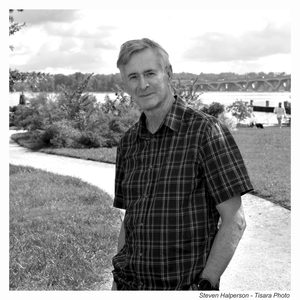
Andrew Macdonald has had many roles in which he has contributed to Alexandria and the greater regional community. Alexandria vice mayor, city councilman, environmental council chair, Potomac River Basin commission chair, polar explorer, natural historian, Smithsonian lecturer, adviser to Congress, geology scientist, conservationist, college professor, earth advocate, native Alexandrian; and now — an Alexandria Living Legend.
Described as “a tireless advocate for the environment” and a “staunch conservationist,” Macdonald began his advocacy for protection of the earth well before the current focus on dire rising temperatures, extreme weather events, and hot political discussions of climate change. As a boy, fishing in the Potomac River, and vacationing outdoors in New England with his parents, he began a life-long appreciation for the natural world.
Macdonald’s Alexandria roots date back to 1864, when his great-grandfather William Francis Godwin passed by the city on a steamer from Washington on his way to a Civil War field hospital further down the Potomac. Godwin was a Union doctor in training and noted in his diary that Alexandria looked “dilapidated and worn out.”
“My parents were really the ones who lived here when Alexandria and the Potomac River were both being revitalized,” Macdonald said. “Their first home was a rental on lower Queen Street and the waterfront was still quite industrial. My father at one point was ferried by boat over to the Anacostia Naval Air Station where he was Executive Officer after returning from Korea. Old Town was still pretty rough and in need of lots of preservation when they finally returned to live here permanently when I was a few years old.”
Macdonald’s parents bought a small row house on the 400 block of South Lee Street, the neighborhood where he grew up.
“I spent a lot of time playing in Lee Street Park and fishing at Jones Point,” Macdonald said.
Over his lifetime, Macdonald has endeavored to increase the understanding of others about the earth, natural resources, biodiversity, plate tectonics, climate change, geo-hazards and volcanics. Recognized as an expert in his field, in the 1990’s, Macdonald taught basic and environmental geology courses at Johns Hopkins and George Mason Universities. He lectured on environmental science, earthquakes, and climate change at the Smithsonian Institution. His opinion pieces on environmental issues have appeared in The Washington Post and the Baltimore Sun.
Macdonald served in the Congressional Office of Technology Assessment, providing congressional members and committees with objective and authoritative analysis of complex scientific and technical issues, including research on the Antarctic impact of global warming on polar ice sheets, glaciers, and the oceans. Even during his short stint as a professional photographer and owner of a small gallery in Old Town from 2008 to 2011, he brought fine art photography of the oceans, polar regions and other natural landscapes deserving global protection to the attention of Alexandrians.
Macdonald has not confined himself to the world of college academics, Congressional offices, lecture halls, and galleries. He worked as a staff scientist aboard the international research vessel JOIDES Resolution; a ship conducting deep sea drilling, to further understanding of earth history and volcanic hotspots. His related scientific papers were published in Nature, Geotimes (now Earth), and Tectonophysics.
Over many years since the 1990s, Macdonald led natural history expeditions to far off places of the earth. His expedition travel destinations aboard Noble Caledonia, Aurora, Quark, and for National Geographic-Lindblad include the Arctic, Antarctica, Caribbean, Falkland Islands, Iceland, Labrador, Newfoundland, the West Indies, and a concentration of time in Southeast Alaska. He continues to occasionally lead exploratory trips today.
Throughout his time traveling, Macdonald maintained close ties to Alexandria, his boyhood home. Going beyond discovery, and merely sharing knowledge, his continuing environmental advocacy has greatly impacted the quality of life for residents here. He made many efforts to further environmental safeguards and promote conservation measures in Alexandria. For five years, from 2002 to 2007, following his appointment by Governor Mark Warner, he served as commissioner and chair on the Interstate Commission on the Potomac River Basin. Macdonald worked to ensure the Potomac River remains a lifeline, assuring protections for drinking water, water quality, and aquatic life; promoting communication and education about this vital resource for Alexandria.
His love for and appreciation for the Potomac River was stirred by his mother.
“My mother was an artist from Delaware,” Macdonald said. “She also loved history, especially the maritime history of Alexandria and Delaware. We have several of her watercolors showing King Street before urban renewal and some of her research on early Alexandria maritime history is kept in the Queen Street Library.”
Described as a “legendary force in Alexandria politics and the city’s environmental protection,” Macdonald’s political efforts, while serving as vice mayor and council member, often were driven by consideration of environmental impacts. He shares that he initially ran for city council hoping to make a difference; thinking the city was “overdeveloping; not taking care of the environment and nature.” Most recently he co-founded the group “Coalition to Stop the Arena at Potomac Yard,” which successfully opposed the unpopular stadium proposal. Saying, “I think there are other development options that will result in far fewer environmental and quality of life impacts and create a more sustainable revenue stream.”
Active as a member for many years on the City’s Environmental Policy Council, and the Environmental Policy Commission (EPC); and now on the citizen’s coalition he founded and chairs, the Environmental Council of Alexandria (ECA); and on a host of other project committees, Macdonald has been a champion of nature over development. In projects as varied as protecting streams, wetlands, history, and bird watching; for areas including Belle Haven, Del Ray, Four Mile Run watershed, Monticello Park, Potomac Yard, and the waterfront; and streams called Great Hunting Creek, Lucky Run, Strawberry, and Taylor Run; he has been the voice for conservation.
He credits his years writing a bi-weekly column, “Alexandria Earth Watch,” in the Alexandria Gazette Packet, in part, for developing a greater familiarity with all parts of Alexandria, its history and ecology. This led to efforts during his council terms for preservation of Old Town and Del Ray historic areas, and his work on cleanup of pollution from the Oronoco gas and Mirant Power plants; and the Cameron Station military base closure. In addition, during his time on the council, he encouraged the city’s development of a forestry and open spaces plan, setting aside funds for open space preservation, and achieving better stream restoration techniques for Alexandria’s waterways.
His nominator, Rod Simmons, former Natural Resource Manager for the City of Alexandria’s Department of Recreation, Parks and Cultural Affairs, wrote, “Macdonald’s lasting significance and accomplishments are underscored and exemplified by his steadfast involvement and tireless advocacy for that which matters most, especially in this day and age. His example speaks for itself and inspires many others.” Andrew Macdonald is truly a Living Legend.
By: Susan Laume
Photo Credit: Steven Halperson-Tisara Photo