

INDUCTION YEAR: 2024
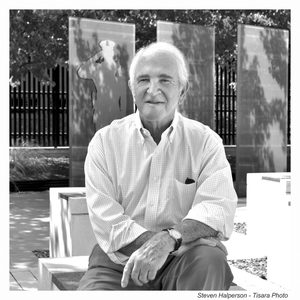
Most Alexandrians know Willem Polak as the founder of the Potomac Riverboat Company, a business he started in the early ‘70s prior to any development along the Alexandria waterfront. At the time the area was undeveloped and mostly undesirable.
But Polak, who holds dual American and Dutch citizenship, spent summers visiting his grandparents in Holland. He always dreamed that one day he would offer water taxi service on the Potomac River, similar to his experiences on the canals in Holland.
“The canals of Amsterdam were beautiful and very intriguing,” Polak said. “This instilled my interest in boating at an early age so finding a way to showcase Washington, D.C. from the water was attractive to me.”
The Torpedo Factory, still a dilapidated Federal Records storage facility, would not begin its transition to an art center until 1974. The Woodrow Wilson bridge had yet to be replaced, the GenOn power plant dominated the waterfront, and National Harbor, not on anyone’s radar, was still decades away.
But Polak took a chance on the area and worked hard lobbying City Hall and federal agencies to secure proper permits in building a network of maritime transportation vessels that are now a vital part of Alexandria’s economy and vibrant waterfront.
“We were lucky if we had five or six employees,” recalled Polak, who was a licensed captain. “It was a typical small business but as interest grew, we added staff and boats. We had to deal with federal agencies to operate interstate on the river, which was always a challenge. But the Alexandria community was receptive to the idea of opening up the waterfront.”
Over the span of 40+ years, Polak grew Potomac Riverboat from a single vessel – a 125-person replica of a Dutch canal boat — into a bustling business that includes tour boats, water taxis to D.C. and National Harbor and (pre-COVID) the baseball boat to Nationals Stadium. The Cherry Blossom, a recreation of a Victorian steamboat, remains a centerpiece of the Alexandria waterfront.
Born and raised in Washington, D.C., Polak attended Saint Albans School and the University of North Carolina. His first job out of college was working at the original Chadwick’s in Georgetown and he ran his first boats out of Georgetown and the Southwest waterfront, which is now the Wharf.
With the arrival of National Harbor, two new water taxis offered service between National Harbor and Old Town Alexandria. The Commander Jacques and Lady Josephine are named after Polak’s Dutch parents, who were both knighted by the King and Queen of the Netherlands.
But while Polak’s name is synonymous with Potomac Riverboat, very few Alexandrians realize the lasting impact he has had unrelated to the riverfront.
In front of Police Headquarters is the Alexandria Fallen Officers Memorial. This memorial bears the names of 18 fallen officers who lost their lives in the line of duty. It would not exist if not for the efforts of Willem Polak.
In 2013, Polak took over as board president of the Alexandria Police Foundation. Prior to his assuming this role, the foundation was in turmoil and in danger of collapsing.
The foundation under Polak became involved with the building of the Fallen Officers Memorial. He was instrumental in taking the red tape of City Hall out of the process and turning the project over to the foundation. He worked closely with former City Manager Vola Lawson and Deputy City Manager Michele Evans to have a Memorandum of Understanding with the city giving the project to the foundation during the building of the memorial. At completion the city would be responsible for the upkeep and maintenance of the memorial but the project was entirely privately funded.
While many foundation board members worked on the project, it was Polak who did the heavy lifting working to secure the resources needed to bring the project to fruition, including significant grants from companies such as Motorola.
Polak deftly navigated behind-the-scenes as the city sought to move approval of the project to the Office of the Arts, which would have significantly delayed or even terminated construction.
In 1989, Corporal Charlles Hill was killed in the line of duty while responding to a hostage situation. His widow, Ginny Hill Obranovich, served for many years as the Executive Director for the Police Foundation.
As expenses spiraled, Polak spent time with contractors and worked to rewrite the MOU that was acceptable to the Foundation. He spearheaded the fundraising and worked with vendors to work at cost so that the original budget was still viable.
Responsibility for the entire project fell to the foundation, which Polak handled as the city required all funds and liability to fall on the APF. In total, the foundation raised approximately $1 million to bring the Fallen Officers Memorial to completion.
“When you deal with any government you have some rules or regs that you have to jump through,” Polak said. “But the fact that we were willing to go out and fund the memorial in its entirety and not look to the city to put in funds had a lot to do with winning over city support of the project. I think once that hurdle was overcome and the city saw that we were able to raise the money and that we had a location for the memorial it was pretty much smooth sailing.”
While managing the logistics of getting the memorial built, Polak also worked closely with members of the police department and the families of the fallen officers so that the memorial would be a lasting legacy to those who sacrificed everything in the line of duty.
“The emotional ties for us through Ginny to her husband and to the memorial are there every day,” Polak said. “Anytime you walk by the memorial, anytime you walk into police headquarters you see that memorial and it sends a message that the community cares about their Police Department and all that these officers sacrifice in their service.”
The Fallen Officers Memorial, a publicly accessible memorial located at 3600 Wheeler Avenue, was dedicated in 2015. It will stand for generations to come as a testament to Polak’s commitment to honor the valor and sacrifice of Alexandria’s fallen officers.
“The Fallen Officers Memorial is an outreach from the citizens of Alexandria to express their gratitude to the Police Department,” Polak said. “It’s a living memorial to the relationship between the community and its Police Department and the commitment to building a better community.”
By Jeanne Theismann
Photo Credit: Steven Halperson– Tisara Photo